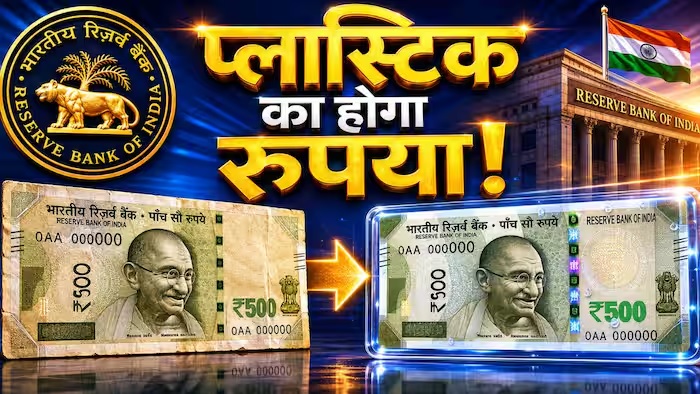
The Reserve Bank of India (RBI) is considering a proposal to introduce polymer (plastic) currency notes, but no final decision has been taken yet and the idea remains at a preliminary stage.
Key facts about the plan:
Why RBI is considering polymer notes:
Durability: Polymer notes last 2–5 times longer than paper notes and resist moisture, dirt, and tearing
Cost savings: Could reduce long-term printing/replacement costs amid rising currency printing expenses (₹6,372.8 crore in FY25)
Security: Enable advanced features like transparent windows, holograms, and micro-optic elements that are harder to counterfeit
Damaged currency problem: Nearly 200,000 damaged notes are withdrawn annually; high-value notes (₹100, ₹500) account for much of this
Historical context:
India previously tested polymer notes in 2012–2014 (pilot in five cities), but the program wasn't implemented then due to technological limitations. Those limitations are now reportedly resolved, with modern ATMs capable of processing polymer notes.
A nationwide rollout would depend on the pilot's outcome, operational feasibility, and public acceptance.


टिप्पणियाँ
अभी तक कोई टिप्पणी नहीं है। पहले टिप्पणी करें!